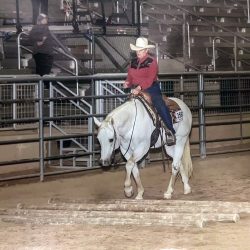
Western tack refers to the equipment and gear used in Western horseback riding, a style of riding that originated from the American West and is associated with cowboys and ranching. Western tack is designed to provide comfort and functionality for both horse and rider during various activities such as ranch work, trail riding, and Western-style competitions. Here are some common items found in Western tack:
- Saddle: The Western saddle is distinct from other types of saddles in its design, featuring a deep seat, high pommel (front), and high cantle (back) to provide stability and security for the rider. It typically has a horn on the front, originally used for roping cattle but now mainly for holding onto during sharp turns or sudden stops. Western saddles are often elaborately decorated with tooling, silver conchos, and other embellishments.
- Saddle Pad or Blanket: A saddle pad or blanket is placed under the saddle to provide cushioning and protect the horse’s back from rubbing and pressure points. Western saddle pads come in various materials such as wool, fleece, and synthetic fabrics, and may be plain or decorative.
- Bridle: The Western bridle consists of a headstall, reins, and bit. The headstall is the part that goes over the horse’s head and holds the bit in place, while the reins are used by the rider to communicate with the horse. Western bridles often feature decorative hardware and may have split reins or a single set of reins attached to the bit.
- Bit: The Western bit is the metal mouthpiece that fits into the horse’s mouth and is attached to the headstall via the bridle. There are various types of Western bits with different designs and functions, including curb bits, snaffle bits, and hackamores.
- Breastcollar: A breastcollar is a strap that goes across the horse’s chest and attaches to the saddle’s cinch or girth. It helps prevent the saddle from sliding backward during riding and provides stability.
- Cinch or Girth: The cinch or girth is the strap that goes under the horse’s belly and secures the saddle in place. It is attached to the saddle on both sides and tightened to ensure a snug fit.
- Spurs: Spurs are optional aids worn on the rider’s boots to provide subtle cues to the horse. They consist of a metal shank with a small wheel or blunt rowel on the end. Spurs should be used with discretion and skill to avoid causing discomfort or injury to the horse.
These are just a few examples of the equipment commonly used in Western riding. Western tack is designed to be durable, functional, and reflective of the traditions and practical needs of Western horsemanship.